From first audit to long-term governance, we build design systems that actually get used. Metajive unites strategy, design, and front-end engineering into one team, so your tokens, components, and documentation ship together, not in silos. We architect scalable component libraries, design token systems, governance frameworks, and adoption programs that tie every release to conversion, velocity, and customer experience.




The challenge
Design shipped the components. Engineering never caught up. Documentation is outdated, governance is nobody's job, and every new product, market, or brand reopens the same debates. The system your team built is working against them now, not for them. Before the next launch or the next budget review, you need a partner who can unify design, code, and governance under one plan.
Key Services
We kick off every engagement with a maturity assessment, stakeholder workshops, and a roadmap tied to your business goals. Our strategists align design, engineering, and product leadership on a shared vision, scope, and KPIs, so your system is scoped to the outcomes you're measured on, not the components you want to own.
We audit your existing system across visuals, code, and documentation, surface the gaps, and prioritize the fixes by impact and effort. You get a scored benchmark and a roadmap, not a deck of observations.
We design production-ready component libraries with atomic design methodology, accessibility baked in, and Figma variables that sync cleanly to code. Every component is named, versioned, and documented for real-world adoption.
We architect multi-brand, multi-platform token systems using Figma variables and Style Dictionary, so your design decisions flow automatically from source of truth to product surfaces. One source, every expression. Your tokens control color, typography, spacing, and motion across web, native, and marketing, without manual sync.
We ship production-grade components in React, Vue, or Web Components, with Storybook, unit tests, and visual regression built in. The same team that designed the library writes the code, so what your engineers install is exactly what your designers intended.
We build to WCAG 2.2 AA baseline with HIPAA-ready workflows, automated and manual audits, and accessible-by-default components that keep you compliant as the system scales.
We write the docs your team will actually use, hosted in Zeroheight or Storybook, with contribution guidelines, API references, and examples that make the right call the easy call.
We install a living governance model with a RACI, contribution workflow, release cadence, and deprecation policy. Your design system becomes a product with owners, rituals, and a roadmap, not a side project that drifts. This is what keeps the library alive in year two, when the brand evolves and the business accelerates.
We engineer Figma libraries with variables, auto-layout, component properties, and branching workflows, so designers can move fast without breaking the system or the source of truth.
We architect single-source systems that express many brands and power many products. Theming strategies, variant hierarchies, and token inheritance let your sub-brands, regional variations, and acquired products live inside one system, without forking the library or duplicating the work.
We plan the rollout, train your teams, build a champions program, and stand up KPI dashboards that track adoption rate, coverage percentage, and time-to-ship. Shipping the system is half the job. Getting your product teams to use it is the other half.


The Metajive solution
Your design system shouldn't fit a template, and neither should your partner. Metajive brings the craft to design your components, the engineering to ship them in code, and the governance to keep them evolving. One team, every layer, no handoffs, every release tied to the outcomes you're measured on. Why coordinate a design boutique, a dev shop, and an internal lead when one partner can build it all?
Design System Case Studies
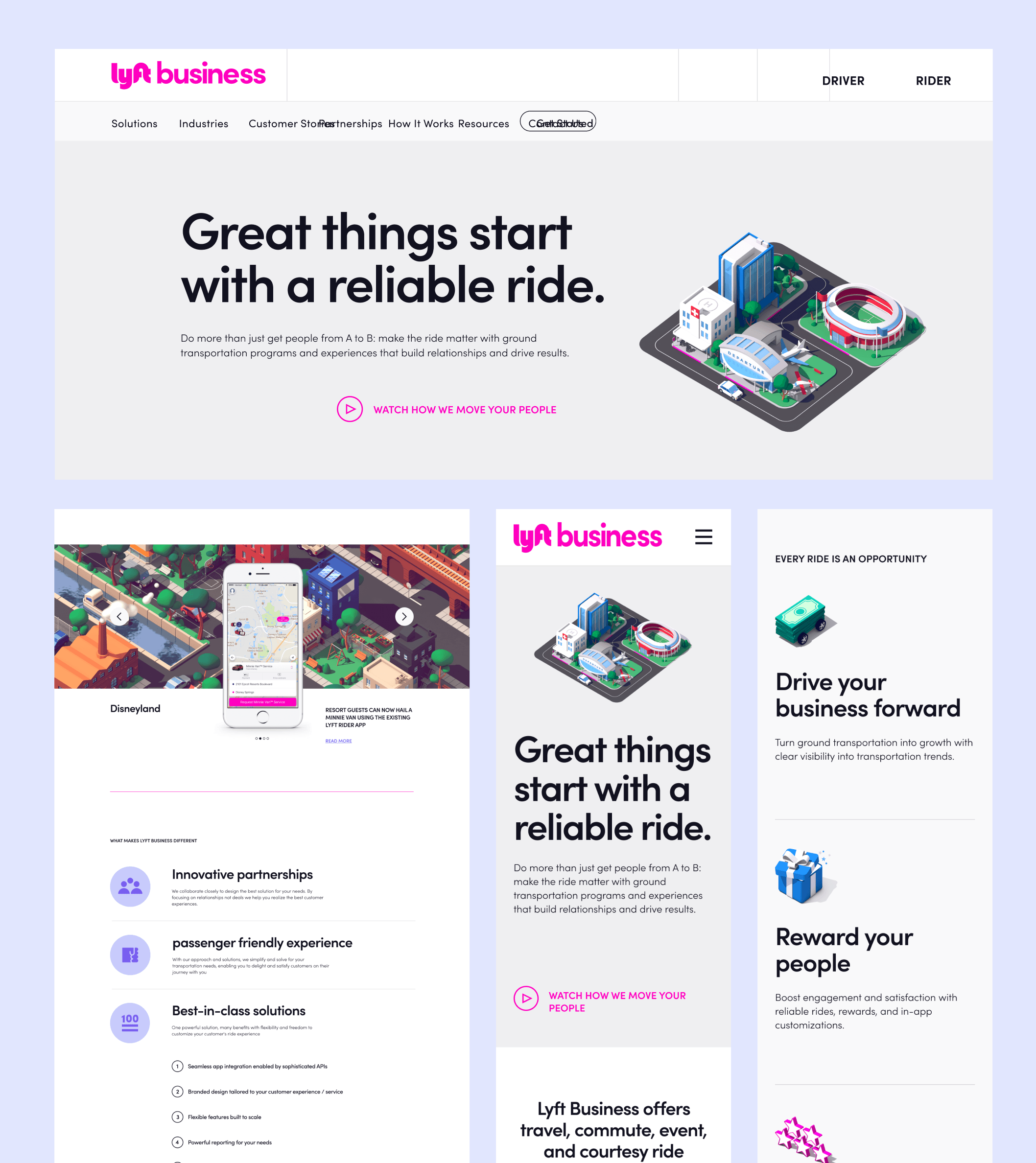
Lyft Business served hospitals, venues, airports, and Fortune 500 enterprises through a single site, with no shared visual language or modular system to scale content across them. Metajive expanded Lyft's refreshed brand into a custom module library, built responsive and ADA-compliant components, and shipped a CMS that lets marketing update every audience segment without rebuilding. Three years and counting, the system still powers Lyft Business's lead engine.
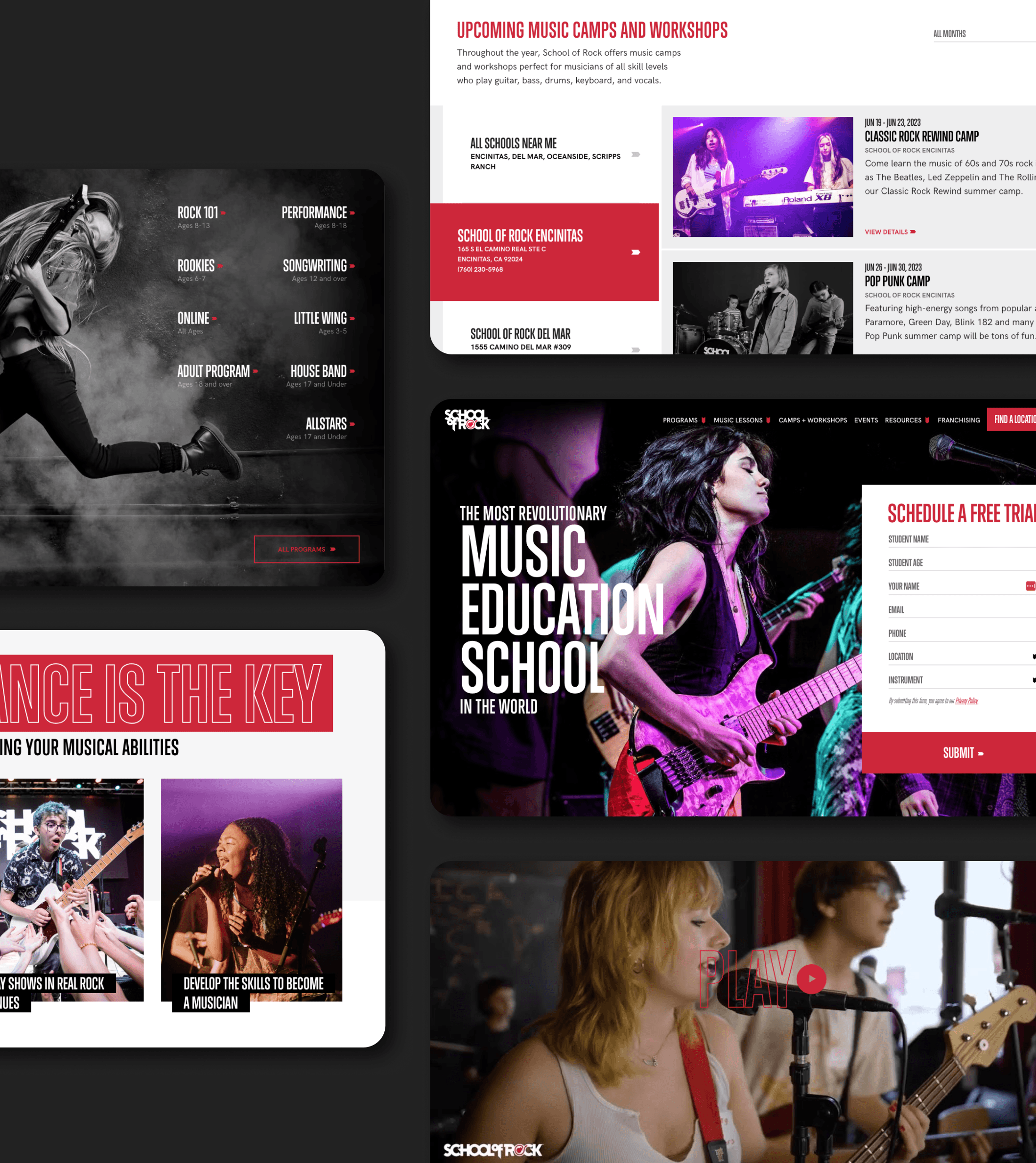
School of Rock's 200+ franchise locations each needed to localize content, events, and instructors without fragmenting the brand. Metajive designed a bold visual identity, built a custom CMS that gives franchisees autonomy inside a shared component system, and integrated Yext, HubSpot, and CRM so location data stays consistent across every platform. Lead collection rose 44% and lead-to-trial conversion improved 200%, with a system that scales across countries and languages.
A design system is a single source of truth for how your brand looks, feels, and functions across digital products. It combines reusable components, design tokens (colors, typography, spacing), documentation, and governance rules into a living library that design and engineering teams share. Done well, it accelerates delivery, enforces brand consistency, and scales with your business across platforms and products.
A design system is the full operating model: components, tokens, documentation, and governance, shared by design and engineering. A UI kit is a visual asset library, usually in Figma, that covers design only. A component library is the coded implementation, usually in React or Vue. You need all three working together, plus governance, to call it a design system.
Most enterprise design systems take six to twelve months to reach production-ready status. A foundational audit runs two to four weeks, an MVP library of core components ships in eight to twelve weeks, and governance and adoption extend across the rest of the year. We phase the work so your product teams keep shipping while the system comes online.
Most enterprise teams need a hybrid: an agency builds the foundation while your internal team owns the long-term. In-house alone is slow and often deprioritized. Agency alone creates orphaned systems no one adopts. Metajive architects the system, codes the library, installs governance, and trains your team, so you end up with an internal capability, not a dependency.
Every engagement delivers a Figma library with tokens and components, a coded component library in React, Vue, or Web Components, hosted documentation in Zeroheight or Storybook, a governance framework with contribution workflows, and an adoption plan with training and KPI dashboards. You get a system designed, built, documented, and governed, not a handoff.
Design system governance is the operating model that keeps your system alive as your brand, products, and teams evolve. It defines who owns the system, how contributions are reviewed, when components are versioned or deprecated, and how adoption is measured. Without governance, design systems drift into artifacts. With it, they scale as living products.
Yes, a design system audit is one of our most-requested engagements. We assess visuals, code, documentation, and adoption, score each against industry benchmarks, and deliver a prioritized roadmap tied to business impact. Most audits complete in two to four weeks, and we can scope follow-on work to remediate gaps, modernize components, or install missing governance.